

Lord Louis Mountbatten
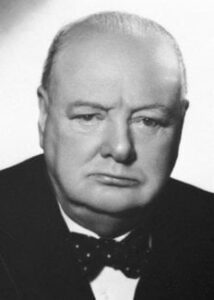
Winston Churchill
“Cue Winston Churchill who demanded of Lord Louis Mountbatten’s nascent Combined Operations Command, that some way MUST be found to neutralise the dock before British naval strategy in Northern waters became effectively paralysed by the need to retain several precious capital ships in home waters – just in case.
As the relatively new Chief of Combined Operations, the charismatic Mountbatten had been tasked with mounting raids on the enemy coast with the aim of keeping the enemy off balance and preparing the ground for an eventual full-scale invasion. Although the name of his new command implied cooperation between all three services, this was, in early 1942, more ambition than reality; and while Mountbatten had in the Army Commandos his own elite fighting force he possessed no air or naval assets to call his own.
Under huge pressure, Mountbatten’s team knew that, while actually getting the men onto target presented huge difficulties, at least they could rely fully on the young Army Commandos to do what would be asked of them.
Having for many months suffered at the hands of traditionalists determined to subvert the formation of any such military elites, these ardent young soldiers, chosen as much for their intelligence as for their fighting abilities, were chafing at the bit in their wild Scottish training areas, desperate for some way of showing what they could really do. It was a desire for action that would cause them not to look too closely into the enormous risks involved.
For risks there were aplenty. As ‘storm troops’ they would have to carry everything they needed with them: weapons and ammunition sufficient to take on a vastly superior (in numbers) enemy force, plus enough explosive charges to destroy an ever-growing catalogue of targets. This, always assuming some way could be found of transporting them 420 miles through the German-controlled Bay of Biscay without anyone realising they were there. Following which there would be the potentially suicidal penetration of a port known to be the second most heavily defended outside Germany.
In the event the answer was found not to lie in guns or armour, but in the high spring tide which, during a few precious days at the end of March, would cause enough water to sweep across the estuary shoals to afford light ships a passage that would not rely on the defended deep-water channel, Always assuming a Combined force could be assembled in time, Saint-Nazaire might therefore be approached from a direction thought by the port’s defenders to be impassable – their complacency perhaps occasioning the surprise Mountbatten knew was their key to success.
With a window of opportunity in sight, Mountbatten set about constructing a ‘Combined’ force, of naval ships to carry the Commandos to Saint-Nazaire and, hopefully, bring them home again, and of the aircraft it had been determined were vital for staging a diversionary air raid. This, however, proved to be easier said than done, as the Navy, in spite of deterring Tirpitz being clearly to its advantage, initially refused to provide the destroyer Mountbatten planned to fill with explosives and explode after ramming the dock gate, and, now under Arthur Harris, Bomber Command was not at all keen to divert aircraft from its burgeoning campaign against German cities.
All of which meant that when 341 sailors and 264 commandos [sic 355 and 270] finally sailed from Falmouth to initiate Operation Chariot. it was on board unsuitable ships – wooden Motor Launches and an antiquated ex-American World War One destroyer now in British Service – with inadequate weapons, short of ammunition, denied effective gun or air support, and yet determined absolutely to sacrifice themselves to save their Merchant Navy comrades from destruction by Tirpitz’ s massive guns.”
© James Dorrian. Used with permission.